
3PL Companies UK: Fulfilment Services
A UK 3PL company providing third-party logistics for UK and international ecommerce brands — storage, pick and pack, and despatch from our FHDDS-accredited, bonded fulfilment centre in Seaham.
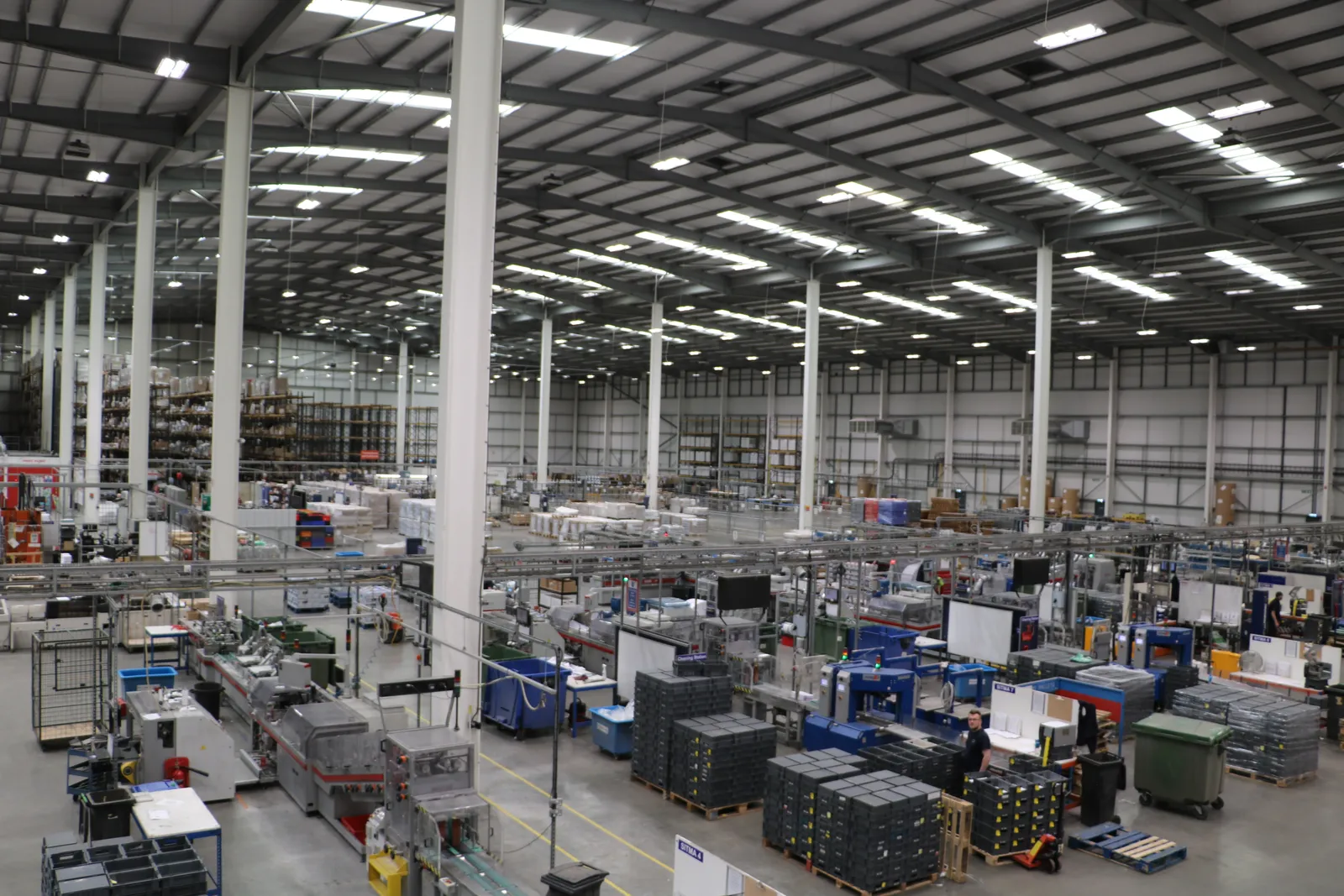
A 3PL — third-party logistics provider — stores your stock, picks and packs your orders, and despatches them to your customers, so you are not running a warehouse or fulfilment centre yourself. Launch Fulfilment UK is a premium 3PL for UK and international ecommerce brands, pairing modern fulfilment technology with FHDDS accreditation and HMRC bonded warehousing at our Seaham facility in County Durham.
Get a QuoteWhat is a 3PL?
A third-party logistics provider (3PL) is the company that handles fulfilment on your behalf: receiving your stock, storing it, picking and packing each order, and despatching it to your customer. Instead of renting a unit, hiring packers and running your own carrier accounts, you send your inventory to the 3PL and it ships orders as they come in.
For a growing ecommerce brand, that turns a fixed operational headache into a service that scales up and down with your order volume.
What a 3PL actually does
A full-service 3PL covers the whole post-purchase journey:
- Receiving and storage — inbound stock is checked in and stored under real-time inventory control.
- Pick, pack and despatch — orders are picked accurately, packed to your spec and shipped on the right carrier.
- Returns — inspected, restocked and reported so they do not tie up your team.
- Compliance — for overseas sellers, FHDDS accreditation and bonded storage where they are needed.
When to move from self-fulfilment to a 3PL
Most brands know it is time when packing orders starts eating the hours they should spend growing the business. Common signals: you are running out of storage space, peak season overwhelms you, error rates creep up, or you want to offer faster despatch than you can manage in-house. A 3PL absorbs that operational load so you can focus on product and marketing.
3PL vs Amazon FBA vs in-house
In-house gives you full control but caps your growth at the size of your unit and team. Amazon FBA is efficient for Amazon orders but locks fulfilment to that channel and its rules. A 3PL sits in between: it fulfils every channel — your own store, marketplaces and wholesale — from one stock pool, with a partner who tailors the operation to your brand. Many brands use a 3PL for direct and multi-channel orders while keeping FBA for Amazon.
How to choose a 3PL in the UK
Beyond price, weigh the things that are expensive to get wrong: accreditation (an FHDDS-registered partner is a legal requirement if you are an overseas seller), integrations with your sales channels, order accuracy, and whether the 3PL understands your product category. Ask for real accuracy and despatch figures, and check how they handle peak.
How 3PL pricing works in the UK
UK 3PL pricing usually breaks down into storage (the space your stock occupies), pick and pack (per order, sometimes per item), and shipping (the carrier rate), with add-ons such as kitting and returns on top. There is no single headline rate, because it depends on your product size, order volume and channels — so we quote against your actual numbers rather than a generic rate card.
3PL, fulfilment centre or warehouse — which is which?
The three words get used as if they mean the same thing, and providers rarely correct it because the ambiguity suits them. They are different, and the difference decides what your invoice looks like:
- A warehouse is optimised for holding stock. Few movements, large ones, and the bill is mostly space — charged per pallet or bin per week.
- A fulfilment centre is optimised for getting individual orders out. Stock arrives in bulk and leaves as single parcels, so the bill is mostly handling — a rate per order, a rate per extra item, packaging and carriage.
- A 3PL is the company, not the building. It operates the fulfilment centre on your behalf, and usually does things the building alone does not: customs work, bonded storage, returns.
Our Seaham site is a fulfilment centre in that sense — built around outbound order flow rather than long-term storage — with HMRC bonded space alongside it for stock that has to sit before duty is paid. If you want the distinction in more depth before comparing quotes, we have written it up in what is a fulfilment centre.
The quickest way to tell what you are being sold: look for a per-order pick rate on the quote. If there isn't one, it is a storage agreement with despatch attached, however the building is described.
What is order fulfilment?
Order fulfilment is everything that happens between a customer paying and the parcel arriving: receiving stock, storing it, picking the right items, packing them, and handing the parcel to a carrier. Returns are part of it too, though they are the part most people forget when they budget.
It is worth separating the word from the company. Order fulfilment is the process. A 3PL is one way of buying it. You can fulfil orders yourself from a spare room, from a unit you rent with staff you employ, or by outsourcing the whole process to a provider. The work is identical in each case; what changes is who carries the cost of doing it and who is accountable when it goes wrong.
That framing matters when you start comparing quotes, because a fulfilment quote is not a price for a thing. It is a price for a process running at your particular volume, with your particular product, at your particular error tolerance.
Outsourcing fulfilment: when it makes sense
Outsourcing fulfilment in the UK usually stops being optional at the point where the operation starts setting the ceiling on everything else. The signals are consistent across the brands we speak to:
- The hours have flipped. You spend more of the week packing than deciding what to sell next.
- Space has become the constraint. You are turning down a bulk buy because there is nowhere to put it.
- Peak is a genuine risk rather than a busy month. One bad November would cost more in refunds and reviews than a year of fulfilment fees.
- You are quoting despatch times you cannot reliably hit, and hoping nobody measures.
The honest counter-signal: below roughly a few hundred orders a month, outsourcing often costs more per order than doing it yourself, because you are paying for a process built to run at scale. If your volume is low and steady and packing is not stopping you doing anything else, staying in-house a while longer is a legitimate answer, and any provider who tells you otherwise is selling rather than advising.
3PL pros and cons
Most pages on this topic list the upsides and call the exercise balanced. The trade is real in both directions, so here it is in both directions.
What you gain: your time back; storage and staffing that scale with the season instead of with your lease; despatch cut-offs and accuracy rates you can actually publish; carrier rates negotiated across everyone in the building rather than on your volume alone; and the compliance work, including FHDDS accreditation and bonded storage, sitting with someone who does it daily.
What you give up: direct control of the unboxing experience day to day, which matters more for some brands than others; visibility, so you now rely on someone else's stock count being right; and immediacy, because a problem at 4pm is resolved by a phone call rather than by walking over to the shelf. Errors also become a split responsibility: the 3PL makes them, and you explain them to your customer.
The two that catch people out are less obvious. Switching is expensive once you are in, so the choice is stickier than the contract suggests. And the economics invert below a certain volume — a 3PL is not cheaper at every scale, only past the point where your own fixed costs stop being justified.
3PL onboarding, and switching from another provider
Onboarding follows the same shape whether you are leaving your own unit or another 3PL:
- Profile and quote. We look at a real month of orders — volumes, units per order, dimensions, destinations — rather than an average.
- Integration. Your sales channels connect to the warehouse system, so orders arrive as pick instructions and stock reports back.
- Stock inbound. Goods arrive, are counted in and located. The count at this point is the number everything afterwards is measured against, so it is worth attending to.
- Test orders, then live. Real orders through the full path before the channel is switched over.
Switching 3PL provider adds one hard constraint the list above hides: your stock is in someone else's building, and it stops being picked before it starts being picked here. That gap is the whole risk. Two things shrink it — moving in phases by SKU rather than all at once where volume allows, and timing the move well away from peak. Check your existing notice period and any exit or handling charges before you commit to a date, because those terms are usually written to make leaving slower than arriving.
Key Capabilities

Pick, Pack & Despatch
Accurate, same-day order processing with branded packaging and custom inserts.

Real-Time Inventory
Live stock visibility across every sales channel through our WMS, so you never oversell.

Platform Integrations
Shopify, WooCommerce, Amazon, eBay, TikTok Shop and 30+ platforms connected out of the box.
UK & International Shipping
Multi-carrier despatch across the UK and worldwide, chosen for cost and speed per destination.
FHDDS & Bonded
FHDDS-accredited and HMRC bonded — the compliance and duty-deferral package overseas sellers need.
Returns Management
Inspection, restocking and reporting handled so returns do not become a bottleneck.
Why Brands Choose Us
A named account manager who knows your brand — not a ticket queue.
FHDDS accreditation and HMRC bonded warehousing under one roof — rare in the UK market.
Vertical depth in beauty and supplements, where compliance and handling actually matter.
Dual US and UK operations — one partner for brands trading on both sides of the Atlantic.
Room to scale from a few hundred to tens of thousands of orders a month without switching provider.
Common Questions
Related
Ecommerce Fulfilment UK
The core pick, pack and despatch service across all your channels.
Supplement Fulfilment UK
Compliance-first 3PL for supplement and nutraceutical brands.
Health & Beauty Fulfilment
Specialist handling and kitting for cosmetics and skincare brands.
Bonded Warehousing UK
Defer duty and VAT on imported stock until it sells.
Best Fulfilment Companies UK
How to evaluate UK fulfilment providers and choose the right one.
UK 3PL Pricing Explained
What drives a UK 3PL quote — storage, pick-and-pack and account fees.
Pick and Pack Services UK
The per-order operation inside the wider partnership.
Fulfilment in County Durham
Where the operation runs from, and when location actually matters.
What Is a Fulfilment Centre?
The difference between a fulfilment centre, a warehouse and a 3PL, and how to tell them apart on a quote.
Looking for a 3PL Partner in the UK?
Tell us about your products, order volumes and sales channels, and we will build a bespoke UK fulfilment quote around your brand.
Get Your Free Quote