
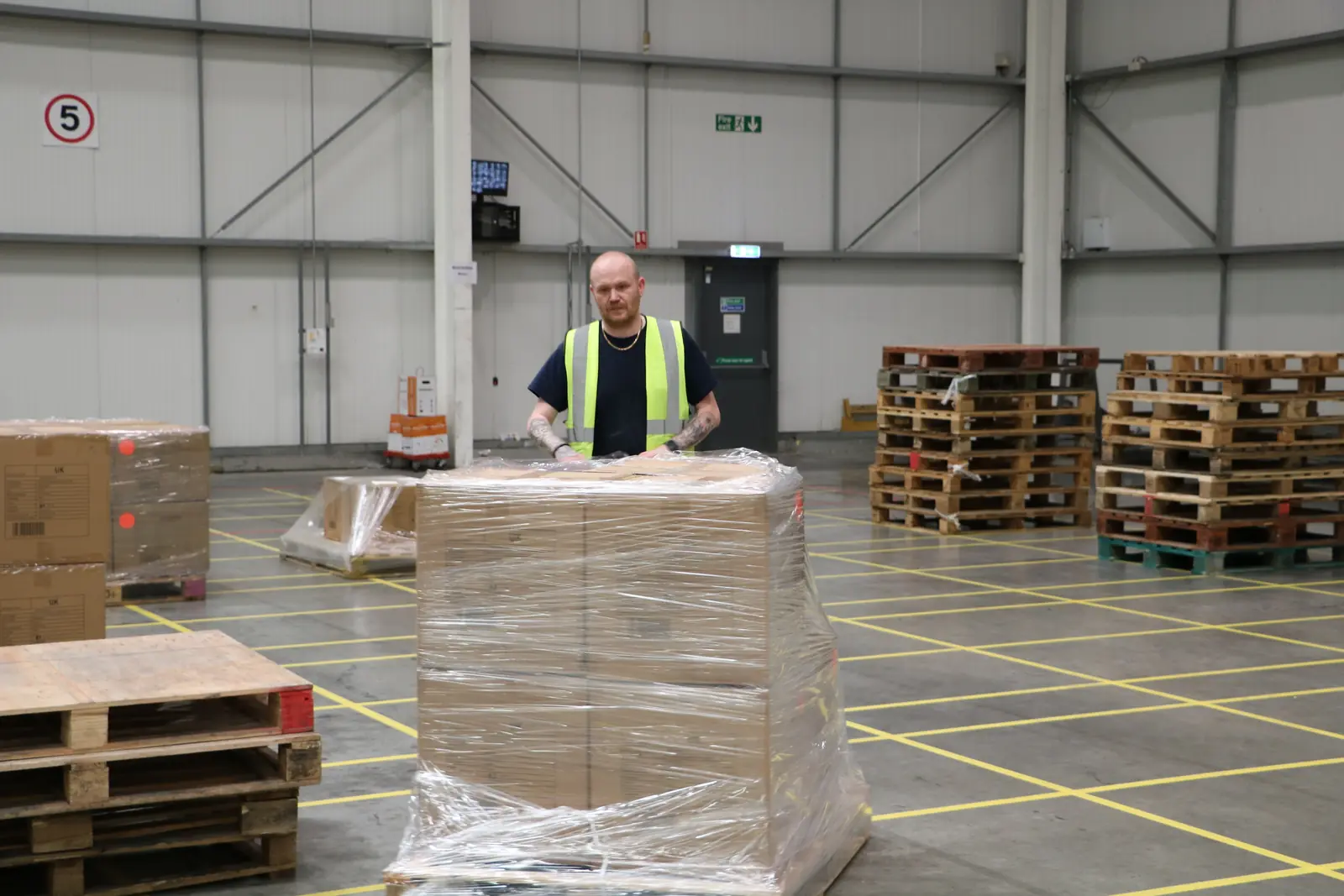
B2B Fulfilment Services UK
Trade and wholesale orders picked from the same stock pool as your direct channel, from our FHDDS-accredited facility in Seaham, County Durham.
Most brands reach B2B by accident. A stockist asks for thirty units, then a distributor asks for a pallet, and an operation built for single-item parcels has to answer in a different unit of measure. B2B fulfilment is not DTC at a larger size — the order shapes, the packing, the paperwork and the delivery all change. Here is what actually differs, what we run, and what to ask any provider before you commit stock to them.
Get a QuoteWhat actually changes when you add B2B
The unit of measure is the first thing to move. A direct order is usually one to three items into a mailer. A trade order is a quantity — thirty of one line, or a mixed pallet across six lines — and it is picked, packed and documented differently:
- Order size and shape — fewer orders, far more units per order, and a packing decision that is about transit protection and stacking rather than unboxing.
- Packing unit — eaches, inner cases or full pallet quantities. Breaking a case to make up a number costs labour and often defeats the buyer's own goods-in process.
- Documentation — trade buyers expect a delivery note that matches their purchase order line for line. A consumer despatch note will not clear their goods-in.
- Delivery — pallet networks and freight rather than parcel carriers, and often a delivery window rather than a next-day promise.
None of that is harder than DTC. It is just a different operation, and a provider set up only for single-item picking will tell you so late.
One stock pool, two ways of selling
The question that decides whether B2B works operationally is whether both channels draw on the same inventory. Held separately, you carry two buffers and one of them is always wrong — a stockist order fails while the same SKU sits reserved for a storefront that is not selling it.
We fulfil direct orders and trade orders from a single pool, which makes allocation the thing to get right rather than something to work around. In practice that means knowing three numbers per line: what is physically on hand, what is already committed to an accepted trade order, and what is therefore genuinely sellable online. Brands that skip the middle number are the ones that oversell a line the week a distributor's order lands.
Eaches, cases and pallets
Trade orders arrive in whichever unit the buyer works in, and the cost of the pick follows that choice more than it follows the order count:
- Eaches — picked as singles into a shared outer. The most labour per unit; worth it for small stockists and sample orders.
- Inner cases — picked as sealed cases. Fast, and the cheapest way to move volume, provided your case quantity matches what buyers order.
- Full pallets — moved as a unit, with pallet configuration and wrap specified per product rather than per order. This is where pick and pack stops looking like parcel work.
If your case quantity and your buyers' typical order quantity disagree, that gap is paid for in labour on every order. It is worth fixing at the packaging-spec level before it is fixed in the warehouse.
Inbound and outbound freight
Inbound: we receive full loads, part loads, pallet-network deliveries and containers, checked against the delivery note at goods-in and booked to a specific location in the warehouse management system. For imported stock, bonded storage lets you defer duty and import VAT until goods leave for a UK buyer, which matters more in B2B than DTC because trade stock sits longer before it sells.
Outbound: pallet and freight movements rather than parcel carriers, priced by weight, pallet count and destination. Regional property costs mean North East storage is generally cheaper per pallet than the South East, which is worth knowing if your trade stock is slow-moving by design.
What to ask any B2B provider
Most B2B fulfilment pages, including some of the better ones, describe the service without telling you what to check. These are the questions that separate providers, and you should ask them of us as readily as of anyone else:
- Which retailer or marketplace portals have you actually worked with? Ask for the specific ones, not a claim of broad compatibility. Requirements differ per buyer and are usually the integration work.
- Who books the delivery slot, and what happens if it is missed? Booking-in is where trade deliveries fail, and the answer tells you who carries the cost.
- What labelling can you apply, and at what point in the pick? Outer-case marking, barcodes and buyer-specific labels are routine — but confirm which you need before assuming.
- How is allocation between trade and direct handled? If the answer is "we hold separate stock", you are paying for two buffers.
- What is the cut-off for a pallet order, versus a parcel? They are rarely the same time, and the difference decides what you can promise.
Where a requirement is buyer-specific — a particular portal, a particular data format — we will tell you what we can confirm and what we would need to scope, rather than answering yes to everything.
What you will be quoted on
A B2B quote is built from different lines than a DTC one, and comparing the two directly will mislead you:
- Goods-in — per pallet, per container or per hour, depending on how stock arrives and whether it needs checking beyond the delivery note.
- Storage — per pallet or per bin per week. Trade stock usually sits longer, so storage is a bigger share of a B2B bill than a DTC one.
- Pick — priced by the unit you actually order in: eaches, cases or pallets. Ask for all three rates, not a blended one.
- Rework and labelling — per unit or per hour, and worth quoting separately because buyer requirements change.
- Outbound freight — by weight, pallet count and destination, with the margin position stated rather than buried.
Send us the real split and the real case configurations and we will price those lines against your numbers.
Key Capabilities
One Stock Pool, Both Channels
Trade orders and direct-to-consumer orders pick from the same inventory, so you are not splitting stock between two operations and guessing which one runs dry first.

Cases and Pallets, Not Just Units
Picking to the unit the order is written in — eaches, inner cases, or full pallet quantities — rather than counting singles into a bigger box.

Inbound Built for Bulk
We receive full loads, part loads, pallet-network deliveries and containers. A19 access means artics reach us without a town-centre crawl.

Allocation You Can See
Knowing what is committed to a trade order versus what is still sellable on your storefront, before you promise the same units twice.

Relabelling and Rework
Trade buyers ask for their own labelling, outer-case marking and presentation. That work happens as part of the pick, not as an exception to it.

FHDDS and Bonded Under One Roof
If you are an overseas brand supplying UK trade, your fulfilment house must be FHDDS-accredited by law. Ours is, with HMRC bonded storage on the same site.
Why Brands Choose Us
Our own facility and our own staff — trade picking is not subcontracted to a site you cannot visit.
Cases and pallets run through the same operation and the same cut-off as single parcels.
FHDDS-accredited and HMRC bonded, so overseas brands can supply UK stockists without a second provider.
A named account manager who knows which of your lines are trade-only and which are shared.
Common Questions
Related
3PL Fulfilment UK
How third-party fulfilment works across every channel from one stock pool.
Pick and Pack Services UK
The per-order picking side, including large and awkward goods.
Ecommerce Fulfilment UK
The direct-to-consumer channel that shares the same inventory.
Bonded Warehousing UK
Defer duty and import VAT on trade stock that sits before it sells.
Understanding UK 3PL Pricing
The cost lines behind a quote, and how to compare providers fairly.
Get a B2B Quote on Your Real Order Profile
Send us your split between trade and direct orders, your case and pallet configurations, and the labelling your buyers ask for. We will price the operation you actually run rather than a generic per-order rate.
Get Your Free Quote